









Why 'Independent Artist' Is a Lie and 6 Other Music Industry Myths, Debunked
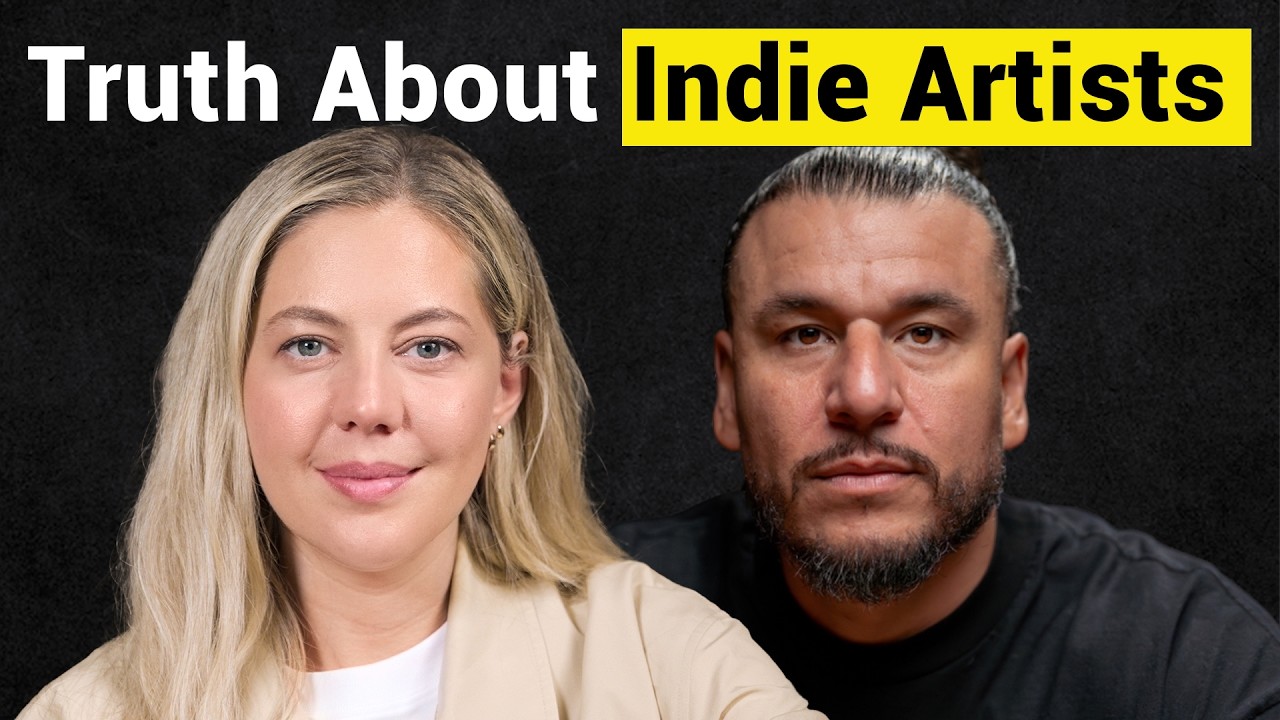
This detailed interview with Milana Lewis, CEO of STEM, a distribution and financial services company for artists, discussing the complexities of the modern music industry. Lewis argues that the music business is currently flawed because royalty accounting is overly complicated, leading to artists being confused about their ownership and payment timelines. She clarifies the distinction between music delivery and distribution, noting that distribution involves much more extensive promotional and strategic services. The discussion also covers the evolving definition of an "independent artist"—which Lewis believes is more accurately described as having autonomy—and the strategic capital required to properly support artist development, which led to STEM’s recent partnership with Concord for more "patient capital." Lewis further highlights the importance of organizational structure, team alignment, and a culture of calculated risk-taking for a successful modern music company.
The modern music business can often feel like a labyrinth. For artists, managers, and even curious fans, it’s an opaque world of convoluted contracts, confusing terminology, and unwritten rules designed to benefit insiders. It seems built on complexity, where understanding how money and ownership truly work is a full-time job in itself.
Fortunately, some insiders are working to bring radical transparency to the chaos. Milana Lewis, the co-founder and CEO of the artist platform Stem, recently sat down for a candid conversation on "The Manager's Playbook" podcast. She didn't just share her story; she pulled back the curtain on the industry's most foundational and misleading myths.
Her mission is brutally simple, captured in Stem's early slogan: "Let's unfuck the business." This post distills the seven most impactful truths from her conversation. These aren't just hot takes; they're foundational principles that expose the industry's inner workings and offer a clearer path forward for any creator trying to build a career on their own terms.
1. "Independence" Is a Myth. What Artists Really Want Is "Autonomy."
The term "independent artist" is one of the most celebrated in modern music, but Milana Lewis dismantles the entire concept, stating it "doesn't exist anymore." The reality is that no one can succeed entirely alone. From getting your music onto Spotify to marketing it to the masses, you will always rely on intermediaries and partners. The idea of being a lone wolf who handles everything from creation to global release is simply not possible.
What artists are actually fighting for, Lewis clarifies, is autonomy. It’s not about doing everything yourself; it’s about having the freedom and control to make your own decisions, own your work, and steer your career as you see fit. The goal isn’t to be alone, but to be in charge.
I think that people conflate independence and autonomy... to me what people I think conflate independence is the concept of autonomy which is having the freedom to move how they want to move with their art.
2. You're Confusing "Delivery" with "Distribution" (and It's Costing You).
Many artists believe that delivery services and distributors do the same thing. This confusion is a critical—and costly—mistake.
Delivery is simply the logistical "pipes" that get your music onto streaming services. Companies like DistroKid and CD Baby are delivery platforms. An artist pays a flat fee, the service uploads the tracks, and the artist retains 100% of their ownership and earnings. It's a transactional, one-and-done service.
Distribution, on the other hand, is a strategic partnership. A true distributor acts as an extension of your team. Lewis offers a powerful physical-world analogy: old-school distributors had to have relationships with retailers, "negotiating the end caps" and "planning promotional activities with the stores." In the digital world, that translates to leveraging relationships for editorial playlist promotion, providing marketing strategy, and advocating for you. This is why they charge a percentage—they are actively working to grow your project's success. Understanding this difference is crucial for choosing the right partner.
3. At a Major Distributor, You're Not a Priority; You're a Row on a Spreadsheet.
When Sony recently revealed it has 26,000 partners, Lewis didn't see it as a flex. She saw it as a liability. For an artist signing with a major distributor that boasts such a massive roster, the promise of dedicated services and global attention is often an illusion. It's simply not possible to provide genuine, hands-on support to tens of thousands of clients.
Her argument is that this model is not about careful selection and support; it's about amassing a portfolio where a few hits pay for thousands of misses. Most artists in that system will not be a priority; they're just another entry in a database.
signing 26,000 labels and 20,000 artists isn't curation it's collection.
To hammer the point home, Lewis wanted to buy a billboard with this quote outside Sony’s office. When her team told her there were no billboards available, she got resourceful. As she put it, "what if we have chat GBT generate an image pretending like it's a Sony office which cost us $0?" She did just that, posting the AI-generated images to Instagram—a savage, modern, and brutally effective critique of a business model that prioritizes volume over value.
4. The "50/50 Net Profit Deal" Is the Most Convoluted Trap in the Business.
A 50/50 net profit deal sounds perfectly fair—you split the profits down the middle. But Lewis calls this "the most convoluted deal that exists" because the math is rarely what it seems. It is not a 50/50 split from the first dollar earned.
Here’s how it actually works, in simplified terms:
• First, costs are taken "off the top." Before any profit is calculated, expenses like distribution fees, admin costs, and other hidden fees are deducted.
• Second, the advance is recouped. After the initial costs are paid, the label gets its advance back.
• Crucially, the advance is recouped only from the artist's 50% share of the remaining money. The label's 50% share is not used to pay back the advance they gave you.
The implication is staggering. In simple terms: to pay back a $100,000 advance, the project needs to generate $200,000 in post-cost profits just for your half of the ledger. The label, meanwhile, starts making money from their share much, much sooner.
5. The Real Reason the Music Business Is "Fucked": Opaque Royalty Accounting.
Lewis’s diagnosis of the industry’s core sickness is brutally simple. It's not about egos or bad actors; it's about a fundamental breakdown in information.
the root of the problem of why the music business is fucked...is because royalty accounting is more complicated than it needs to be because the simple answer is that people don't know what they own and when they're going to get paid.
This thesis isn't just a theory; it’s the entire origin story of her company. Her initial idea for Stem wasn't a distribution company at all. It was a simple app to split payments between collaborators—an admin tool to help independent artists pay their producers and songwriters without signing a major label deal. But she immediately hit two massive roadblocks: the legal complexity of becoming a money transmitter, and the fact that existing distributors refused to partner with a new startup and share the necessary data.
She was forced to build a distribution company out of necessity just to get the financial rails she needed. The industry's payment infrastructure was so broken that the only way to fix it was to build an entirely new system from the ground up.
This mission evolved into her financial platform, Tone. While onboarding record labels to the platform, her team made a shocking discovery: many of the labels themselves did not fully understand the terms of their own contracts. They had misinterpreted the deals they had written. If the people writing the checks are confused by their own paperwork, the artists signing those deals are at a profound and systemic disadvantage.
6. To Be Truly Innovative, You Need to Get Stupider.
In a world that prizes expertise, Lewis’s most surprising piece of advice is to embrace naivety. She argues that knowing too much about the established rules and "how things are done" in the music industry can actually be a barrier to true innovation.
She references the book Be Stupid by the founder of Diesel Jeans, who knew nothing about fashion and succeeded by doing what was obvious to him, not what was conventional. His incompetence became a disruptive superpower. Instead of hiring intimidating salespeople, he hired "cool club kids" to create a better vibe. He rented an impossibly expensive storefront in Times Square—a move industry veterans would have called insane—which became a "happy accident" that resulted in free advertising, with the Diesel logo appearing in the background of every TRL broadcast.
This insight is so powerful that Lewis says she now actively tries to "get dumber" by looking to other industries for fresh perspectives. It's a lesson for any creator: your best ideas might come from ignoring the playbook, not memorizing it.
Conclusion: From Obscurity to Ownership
The recurring theme in Milana Lewis's insights is that the music industry's power structure has long been built on intentional complexity. Opaque deals, confusing language, and siloed information create an environment where artists are forced to give up ownership and control out of necessity.
But the path forward is clear. It lies in demanding transparency, understanding the real math behind the deals, and prioritizing autonomy over the myth of independence. The future of the business belongs to those who ask the hard questions and build their careers on a foundation of clarity and true ownership.
If the foundation of the business is this complicated, what's the single most important question an artist should ask before signing any deal?
What's Your Reaction?
 Like
0
Like
0
 Dislike
0
Dislike
0
 Love
0
Love
0
 Funny
0
Funny
0
 Angry
0
Angry
0
 Sad
0
Sad
0
 Wow
0
Wow
0