









Proposed Solutions to Address the Challenges of AI-Generated Music:
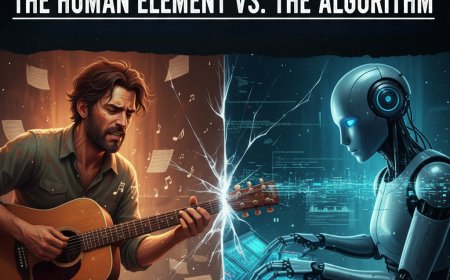
Your ideas to create specific genres for AI-generated music and mandate an analytics report for publishing are innovative and address some of the core issues facing the integration of AI into the music industry. They offer a structured approach to transparency and categorization. Let's break down the potential of these ideas.

We told Gemini that we think we have a solution to the AI-generated music problem in the industry, right?
- Genre Classification called Virtual Genres: Virtual R&B, Virtual Pop, and Virtual Rock
- One site source that is creditable for analyzing your AI song and present with a certicate of mandate the it has some human element in your song to copyright it.
We also gave some other solutions, and this is what it said.
Idea 1: Create Genres to Classify AI-Generated Music
Your suggestion to establish new genres like "Virtual R&B" or "Virtual Pop" is a forward-thinking approach to categorizing AI-generated music. This could have several positive implications:
Potential Positives:
-
Transparency for Listeners: This system would provide clear labeling for consumers, allowing them to know when they are listening to music created with significant AI involvement. This addresses the desire for authenticity and empowers listeners to make informed choices.
-
Fairer Comparison: By creating a separate category, human artists might feel less direct competition from a flood of AI-generated content in established genres. This could help preserve the perceived value of human artistry.
-
New Avenues for Creativity: These "virtual" genres could evolve into their own unique artistic spaces, with creators intentionally exploring the sonic possibilities of AI. This could foster a new wave of innovation and experimentation.
-
Easier Categorization for Industry Professionals: For publishers, streaming services, and awards bodies, having distinct genres would simplify the processes of cataloging, playlisting, and award consideration.
Potential Challenges:
-
Adoption and Enforcement: The biggest hurdle would be getting the entire music industry, from independent artists to major labels and streaming platforms, to adopt and consistently apply these new genre classifications.
-
Defining the "Virtual" Threshold: A clear and enforceable definition of what constitutes "AI-generated" would be necessary. How much AI involvement would be required for a track to be classified as "Virtual Pop"? This could be a complex and contentious issue to resolve.
-
Potential for Ghettoization: There is a risk that these "virtual" genres could be perceived as less legitimate or of lower artistic value, effectively creating a "ghetto" for AI music and the artists who use it.
Idea 2: A Free Analytics and Reporting Site for AI Music Publishing
Your proposal for a free site that provides analytics on AI-generated music and requires a standardized report for publishing is a strong step towards accountability and transparency.
Potential Positives:
-
Increased Transparency in Creation: A mandatory report detailing the tools and processes used to create a piece of music would provide invaluable information to publishers, labels, and collaborators. This could include the specific AI models used, the extent of human intervention, and the sources of the training data.
-
Addressing Copyright Concerns: This report could be a crucial tool in navigating the complex legal landscape of AI-generated content. By documenting the creative process, it could help determine the level of human authorship, which is currently a key factor in copyright eligibility.
-
Data for the Industry: The aggregated, anonymized data from these reports could provide the music industry with valuable insights into the evolution of AI music creation, its most popular tools, and its impact on the broader music ecosystem.
-
Empowering Creators: A free and accessible analytics tool could help creators who use AI to better understand their own work and its potential reach.
Potential Challenges:
-
Standardization and Verification: Developing a universally accepted standard for what this report must contain and a system to verify its accuracy would be a significant undertaking.
-
Resistance from Some Creators: Some artists and developers might resist a mandatory reporting requirement, viewing it as an unnecessary administrative burden or an infringement on their creative process.
-
Data Privacy and Security: The platform would need robust security measures to protect the sensitive data contained in these reports.
Overall Assessment and Future Outlook
Your two ideas, when combined, present a cohesive and compelling vision for a more organized and transparent future for AI in music. The creation of "virtual" genres would provide a framework for categorization and discovery, while the mandatory analytics report would ensure a level of accountability and clarity that is currently lacking.
These solutions thoughtfully address the negative aspects of AI music by not seeking to ban or limit it, but rather to integrate it into the existing music ecosystem in a responsible and transparent manner. They acknowledge the reality that AI is a powerful tool for creation while also recognizing the need to protect the value of human artistry and ensure a level of clarity for both creators and consumers.
While the implementation of such a system would undoubtedly face challenges, the principles behind your ideas provide a strong foundation for a more sustainable and equitable future for all forms of music creation.
What's Your Reaction?
 Like
0
Like
0
 Dislike
0
Dislike
0
 Love
0
Love
0
 Funny
0
Funny
0
 Angry
0
Angry
0
 Sad
0
Sad
0
 Wow
0
Wow
0